
We Are Not Parenting in the World We Grew Up In!

Dr. Deb Zupito
Let's clear something up right away. Our parents did not raise us in the world we are parenting in now. And their parents definitely did not. This is not about blaming past generations. It is about reality.
Life is faster, louder, more stimulating, and more demanding. Technology alone has reshaped how children experience the world, how adults function, and how nervous systems stay on high alert from morning to night.
Children's brains, however, are still developing at the same pace they always have. That mismatch matters.
Yesterday's Parenting, Today's World
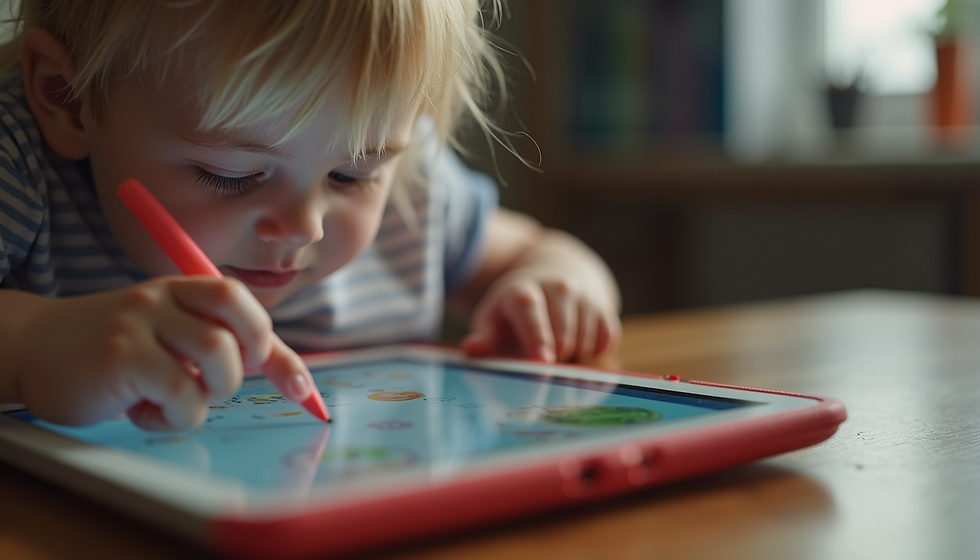
Many of us were raised in a time with fewer screens, fewer schedules, and fewer expectations. Boredom existed. Quiet existed. Adults were less reachable. Children were expected to adapt to the world, not the other way around.
Today, children grow up surrounded by constant input. Screens, noise, transitions, packed schedules, social pressures, and adults who are also overstimulated and exhausted. Even loving, attentive households are managing a level of cognitive and sensory load that simply did not exist before.
And yet, children are often still expected to sit still longer, regulate emotions sooner, handle disappointment better, and bounce back faster. That is a tall order for a developing brain.
Obedience Used to Look Like Regulation
In the past, a quiet child was often seen as well-behaved. Compliance was mistaken for coping. Emotional suppression passed as self-control. What we now understand is that many children were not regulated. They were overwhelmed, shut down, or trained to stay small to stay safe.
Today, children are expressing more. Not because they are weaker, but because the world is louder and they have not yet built the internal tools to manage it.
Their brains are still developing from the bottom up. Emotional and sensory systems lead. Logic and impulse control come much later. Technology did not speed that up. If anything, it made the gap more obvious.
Expecting a child to calmly self-regulate in a world that rarely slows down is like asking them to whisper in a stadium.
Hard Days Are Not a Parenting Failure
This is where I want parents to take a breath!
Hard days do not mean you are doing it wrong. They tell you that you are parenting a child whose nervous system is navigating a modern world while their brain is still developing. Reactions fly because the capacity is exceeded. Yours too!
Understanding this does not magically prevent meltdowns, power struggles, or emotional explosions. But it does change what happens next. Instead of shame, there is understanding. Instead of punishment first, there is curiosity. Instead of "What is wrong with my child?" there is "What is hard right now?"
That shift is everything.
Knowledge Is the Tool Our Parents Did Not Have

Previous generations parented with rules and instincts. Today's parents are parenting with information, reflection, and a whole lot of unlearning.
Understanding brain, motor, and emotional development gives parents context. It explains why some days feel impossible and why strategies from the past often fall flat now.
This is not permissive parenting. This is informed parenting.
It is choosing guidance over control. Repair over perfection...connection over fear.
And yes, sometimes humor helps, because if you cannot laugh at the fact that your child cannot find their shoes while holding a tablet and asking for a snack, what can you do?
Parenting Today Requires New Tools
We are not raising children the way we were raised, because the world is not the same.
Parents today are doing deeper work and regulating themselves while teaching skills that take years to build. Holding boundaries while staying connected is a learning science that was never taught to them as children.
That work matters.
If parenting feels harder than you expected, it is not because you missed something. It is because you are parenting in a world that has changed rapidly, with children whose development still unfolds slowly and beautifully.
Understanding that gap is not just helpful; it's essential. It is essential. And remember, it takes a village. Parenting was never meant to be done alone!!!


This is so informative !